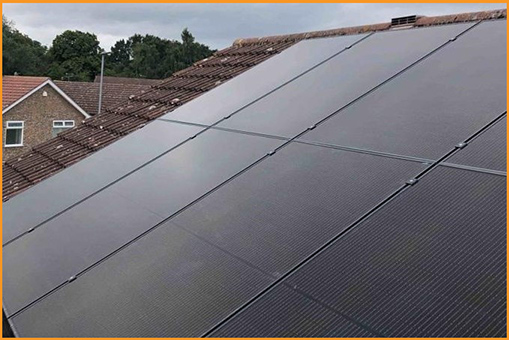
How will Solar PV help me?
Solar PV is becoming an increasingly popular renewable energy installation, with more systems being installed as a result of increases in energy costs.
Solar PV
- Saves on your electricity bills
- You could get paid by your electricity supplier to sell any extra electricity you generate to them
- Helps to reduce your carbon footprint
To maximise the benefits of installing Solar PV we assess the orientation and the pitch of your roof and any overshading from trees or other buildings.
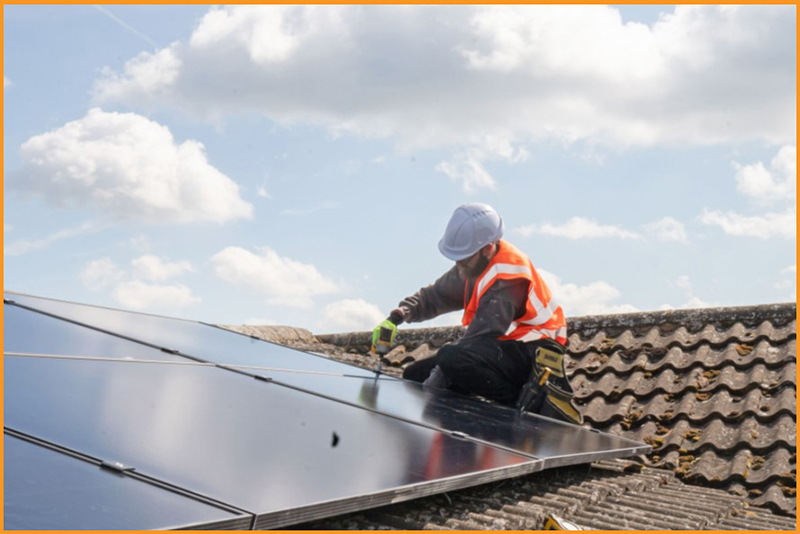
Installation
Solar PV is normally installed in a day but may take longer if the installation is larger than average. Your Solar technician and electrician will work together to ensure your system is safely installed and providing you with electricity.
Solar PV works best when the sky is clear and the sun is bright, but solar panels work to produce electricity even on cloudy day.
Your solar panels are made to last for over 25 years and need very little maintenance over that time.
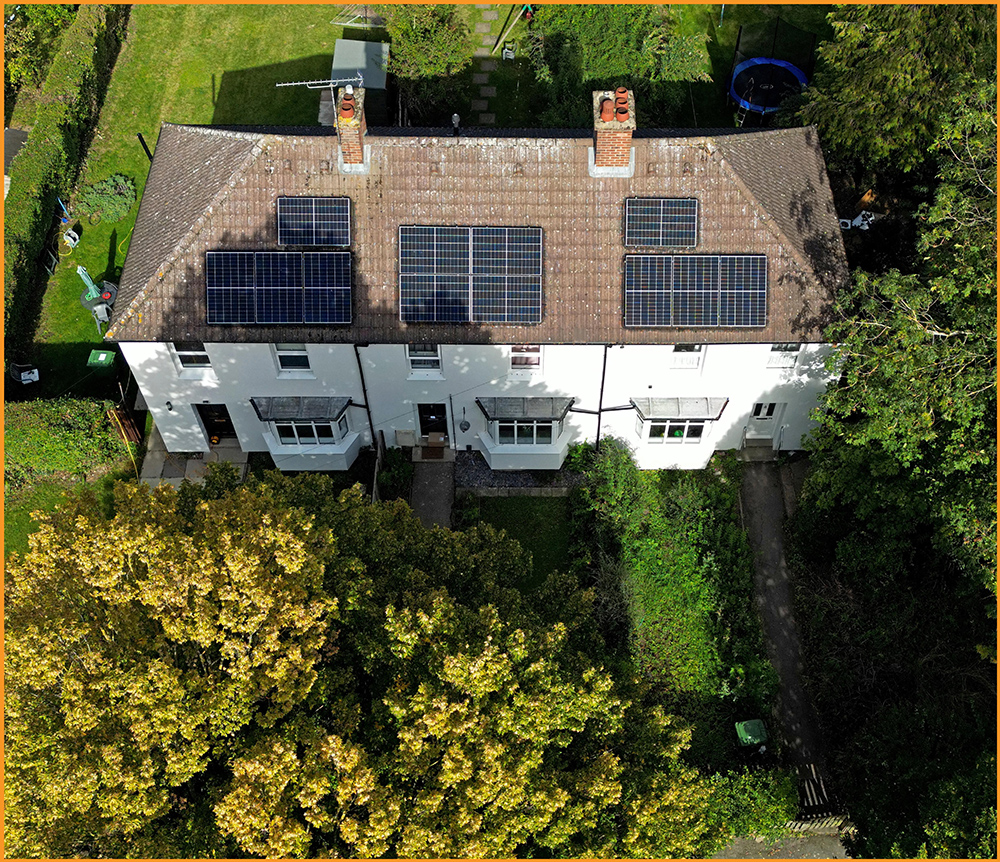
How much can I save?
Having solar PV installed can increase the value of your home by improving the Energy Performance Certificate (EPC) rating.
The amount of money you can save with Solar PV depends on the number of panels, the position and how you use your electricity. Our team will let you know how much electricity you can expect to generate after your property assessment, but the Energy Savings Trust (EST) provides a useful calculator that can give some guidance.
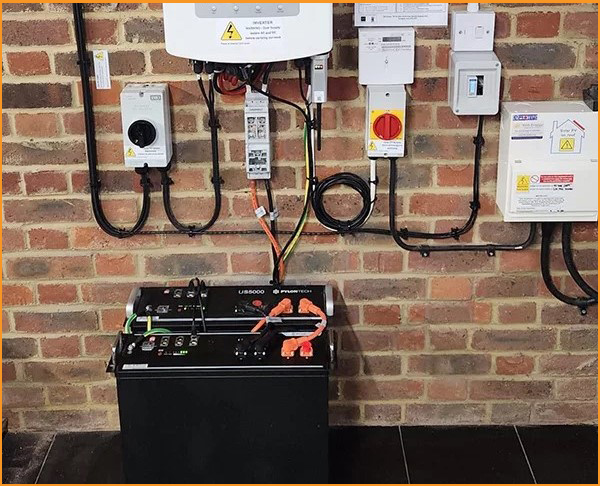
Battery Storage
Depending on how you use your electricity it may be beneficial to install battery storage alongside your PV system as this can help you store electricity generated during the day.
Funding
You may be able to access grant funding to support your Solar PV installation. Not all grant funding is means tested, and our team will always check to see if you can access grant funding.
You can also benefit from 0% VAT, which is available until 2027 on insulation installations and renewable energy upgrades.

Solar PV FAQ's
Read through our list of Frequently Asked Questions (FAQ's) about Solar Photovoltaic systems. Got a question we haven't covered? Simply contact us here.
A. Solar PV systems convert sunlight into electricity using photovoltaic cells. It can power homes, businesses, or feed energy into the grid.
A. Solar panels absorb sunlight and convert it into direct current (DC). An inverter then converts DC into alternating current (AC) for use in electrical appliances.
- Solar panels
- Inverter
- Mounting structure
- Battery (optional for storage)
- Monitoring system
A. Typically, solar panels last 25 to 30 years, while inverters may need replacement after 15 to 20 years.
A. Solar PV systems require minimal maintenance - mainly cleaning panels and checking connections periodically.
A. Yes, panels still generate electricity on cloudy days, but at reduced efficiency. At night, they do not produce power; batteries or grid supply are needed.
A. Net metering allows you to send excess electricity back to the grid and receive payment or credits, reducing your electricity bill.
A. On average, 1 kW of solar PV requires about 10 m² of roof space, depending on panel efficiency.
A. Costs vary by location, system size, and technology, but prices have dropped significantly in recent years. Incentives and subsidies can reduce costs further. Find out more by visiting our Grants page.
- Reduces electricity bills
- Environmentally friendly (low carbon footprint)
- Energy independence
- Long-term savings